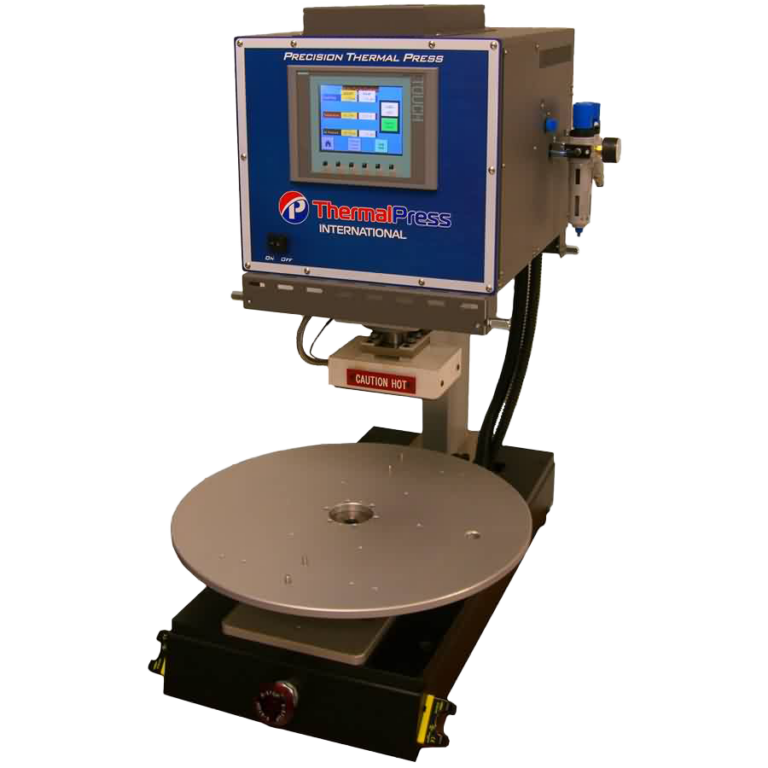
This video showcases a large, custom-designed Thermal Press system engineered to heat seal 2D bioreactor bags used in biopharmaceutical and life science applications. These assemblies require precise control of heat and pressure over large sealing areas to ensure uniform, reliable perimeter seals that meet stringent performance and quality standards.
The system is specifically designed to accommodate the size and complexity of bioreactor bags, with custom tooling that supports the material and maintains proper alignment throughout the sealing process. Accurate fixturing ensures consistent contact across the full seal path, helping to eliminate variability and ensure seal integrity across the entire perimeter.
Due to the size and mass of the thermal head required for this application, the machine incorporates a reverse actuator configuration. This design provides enhanced control and stability when raising and lowering the thermal head, allowing for smooth, repeatable motion and improved handling of the load.
During operation, the bag is positioned within the fixture and the cycle is initiated. The thermal head applies controlled heat and pressure across the sealing surface during the dwell phase, forming a strong, uniform bond. The system is engineered to maintain consistent process parameters across large surface areas, which is critical for applications involving fluid containment and sterile processing environments.
This custom Thermal Press solution demonstrates TPI’s ability to engineer equipment for demanding, large-format heat sealing applications. With precise temperature control, repeatable force application, and application-specific tooling, these systems support reliable, validated manufacturing processes for bioreactor bags and other large medical or bioprocessing assemblies.