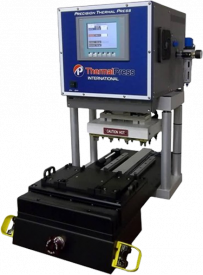
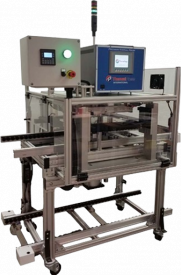
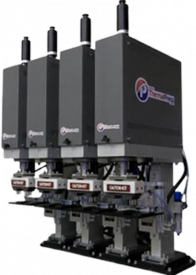
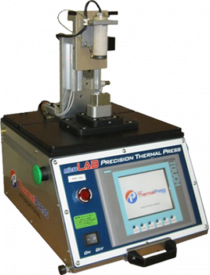
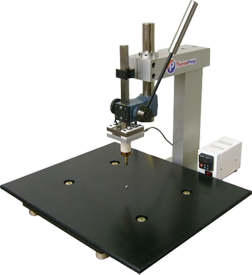
Selecting the right heat sealing equipment depends on the materials being joined, seal geometry, production volume, and required process control. Thermal Press International offers configurable thermal press systems for applications involving plastic films, flexible tubing, medical bags, fluidic devices, and other thermoplastic components. Our engineers help evaluate sealing methods, tooling, temperature control, and automation requirements to achieve consistent, reliable seals.
Material Compatibility and Seal Requirements
The materials being joined are a primary consideration when selecting heat sealing equipment. Film and foil composition, thickness, thermal properties, and compatibility between mating surfaces can influence the sealing method and processing parameters. Seal width, geometry, and required bond strength should also be evaluated to determine the appropriate equipment and tooling configuration.
Temperature, Pressure, and Dwell Time Control
Reliable heat sealing requires consistent control of temperature, pressure, and dwell time. Different materials and seal geometries may require specific combinations of these parameters to produce strong, uniform seals without damaging the surrounding components. Adjustable process settings allow manufacturers to optimize sealing conditions and improve repeatability across production runs.
Part Geometry, Tooling, and Fixturing
The size and shape of the components being sealed influence tooling and equipment selection. Custom-designed sealing heads, nests, and fixtures help maintain alignment, support components during the sealing cycle, and apply heat and pressure to the intended areas. Proper tooling is especially important for applications involving flexible films, tubing, ports, and complex assemblies.
Production Volume and Automation Requirements
Production volume, cycle time, and operator involvement help determine whether a manual, semi-automated, or fully automated heat sealing system is most appropriate. Lower-volume applications may benefit from flexible standalone equipment, while higher-volume operations may require automated loading, rotary indexing tables, shuttles, or conveyor integration to improve throughput and process consistency.
Seal Quality and Process Validation
Applications with demanding quality requirements may require additional attention to process monitoring, repeatability, and seal integrity. Depending on the application, manufacturers may evaluate seal strength, leak resistance, visual appearance, and consistency across production runs. Equipment configuration and process controls should support the customer’s inspection, testing, and validation requirements.
Engineering Evaluation and Equipment Selection
Choosing the right heat sealing system involves evaluating the complete assembly process, including materials, seal design, production requirements, and quality expectations. Thermal Press International works with manufacturers to assess application requirements, develop appropriate tooling, and identify suitable equipment configurations. Engineering consultation and application testing can help establish sealing parameters for consistent, repeatable results.