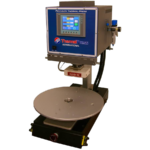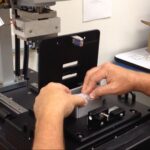
This video showcases a custom-format Thermal Press International machine engineered to heat stake a large automobile taillight assembly. Applications such as automotive lighting components often require high-strength fastening, precise alignment, and repeatable thermal forming across multiple stake points to ensure structural integrity, fit, and long-term performance in demanding vehicle environments.
In this process, the taillight assembly is positioned within custom tooling designed to securely locate the large components prior to the staking cycle. The machine features a multi-actuator configuration with multiple thermal heads, allowing several staking points to be processed in a coordinated sequence or simultaneously depending on application requirements. Controlled heat, pressure, and dwell time are applied to reform thermoplastic posts into secure mechanical retainers that permanently join the assembly components.
Because automotive taillight assemblies are often large, contoured, and multi-piece, specialized machine architecture and custom fixturing are essential for maintaining part alignment and delivering consistent staking results across the entire assembly. Multi-head systems such as this can significantly improve cycle time, reduce handling, and support high-volume automotive production demands.
Thermal Press systems are widely used in automotive lighting, interior trim, electronics housings, sensor assemblies, and other large-format plastic components requiring dependable fastening and repeatable process control. Thermal Press International provides customized heat staking solutions engineered for complex geometries, multiple stake locations, and demanding manufacturing environments.