
Heat staking is a thermal assembly process used to join thermoplastic components to other materials (including dissimilar plastics or metals) by melting or deforming a plastic post with controlled heat and pressure. This technique is ideal for:
Our thermal press systems offer tight process control, interchangeable tooling, and scalability – making them ideal for heat staking operations in both R&D and high-volume production. No other machine on the market today offers such precision.
All of the following TPI machines can be configured for heat staking:

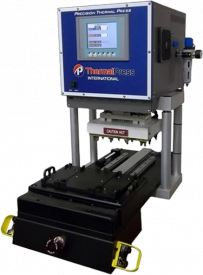
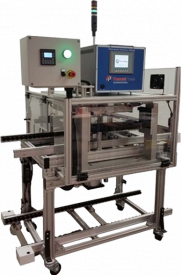
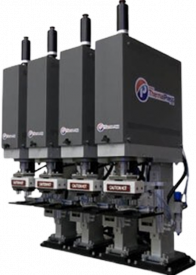
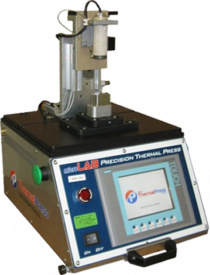
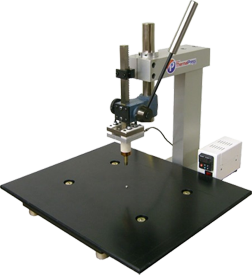

These systems support advanced process features like:
Selecting the right heat staking equipment depends on the materials being joined, part geometry, number of staking points, production volume, and required process control. Thermal Press International offers configurable thermal press systems for applications ranging from prototype development to high-volume automated assembly. Our engineers help determine the appropriate equipment, tooling, temperature control, and motion requirements to achieve consistent, repeatable results.
The appropriate heat staking equipment depends in part on production volume and cycle time requirements. Manual and semi-automated thermal press systems can provide flexibility for prototyping and lower-volume assembly, while higher-volume applications may benefit from automated part handling, rotary tables, or in-line conveyor systems. Selecting the right configuration helps balance production efficiency, process consistency, and investment.
The size, shape, and material of the components being assembled influence the equipment selection. Important considerations include the number and location of staking points, access to the plastic posts, and the space available for tooling and fixtures. Larger or more complex assemblies may require custom configurations to ensure accurate positioning and consistent results.
Consistent heat staking requires precise control of temperature, force, and motion. Different thermoplastic materials and part geometries require specific processing parameters to form reliable joints without damaging surrounding components. Equipment with adjustable process settings allows manufacturers to optimize heat staking conditions, improve repeatability, and accommodate different assembly requirements.
Proper tooling and fixturing are essential for accurate, repeatable heat staking. Custom-designed staking tips, nests, and fixtures help maintain component alignment, distribute heat appropriately, and support the assembly during the staking process. Tooling requirements should be evaluated early to ensure compatibility with the selected equipment and the components being assembled.
Heat staking equipment can be configured for standalone operation or integrated into larger automated assembly systems. Depending on production requirements, options may include rotary indexing tables, automated shuttles, part detections, and conveyor integration. These capabilities can help reduce manual handling, improve cycle time consistency, and support higher production volumes.
Selecting the most appropriate heat staking system often requires evaluating the complete assembly process rather than focusing on equipment specifications alone. Thermal Press International works with manufacturers to review component materials, joint design, production requirements, and tooling considerations. Application testing and engineering consultation can help identify the equipment configuration and process parameters best suited to achieving consistent, repeatable assembly results.
Custom Tooling & Integration
Thermal Press International’s heat staking equipment is trusted across a wide range of industries and precision plastic assembly needs. Explore some of the most common heat staking applications we support:
Talk to Our Engineers