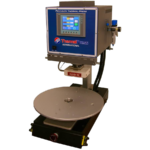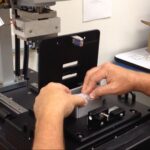
This video provides an up-close view of a Thermal Press International H-Series machine performing a heat staking operation on a printed circuit board (PCB). Applications involving PCBs often require precise contorl of heat, pressure, and dwell time to form secure mechanical bonds without damaging sensitive electronic components.
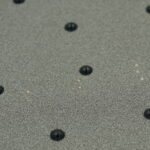
In this process, the PCB is positioned within a custom fixture that ensures accurate alignment of the components prior to the heat staking cycle. Multiple thermoplastic posts are engaged simultaneously, with the thermal heat applying controlled heat and force to reform each post into a secure mechanical fastener. The up-close persepctive highlights the material flow and forming process as the posts are sofened and reshaped to retain the assembly.
The H-Series platform is well-suited for applications requiring higher force and consistent process control, making it ideal for PCB assemblies with multiple staking points or more robust material requirements. Precise parameter control ensures repeatable results across all staking locations while maintaining the integrity of the electronic components.
Heat staking is widely used in electronics manufacturing for securing housings, connectors, and internal components within PCB assemblies. Thermal Press International systems provide the accuracy, repeatability, and process stability required for both development and high-volume production environments.